Why Accountability Backfires for Burned Out People
Accountability is often treated as a cure all. Miss a goal? Add a deadline. Lose momentum? Find a partner. Fall behind? Increase the pressure.
For people with sufficient energy, this can work. But for people who are burned out, accountability often does the opposite of what it intends. Instead of motivating action, it quietly accelerates withdrawal.
This isn't a character flaw. It's a design mismatch.
Accountability Assumes Surplus Energy
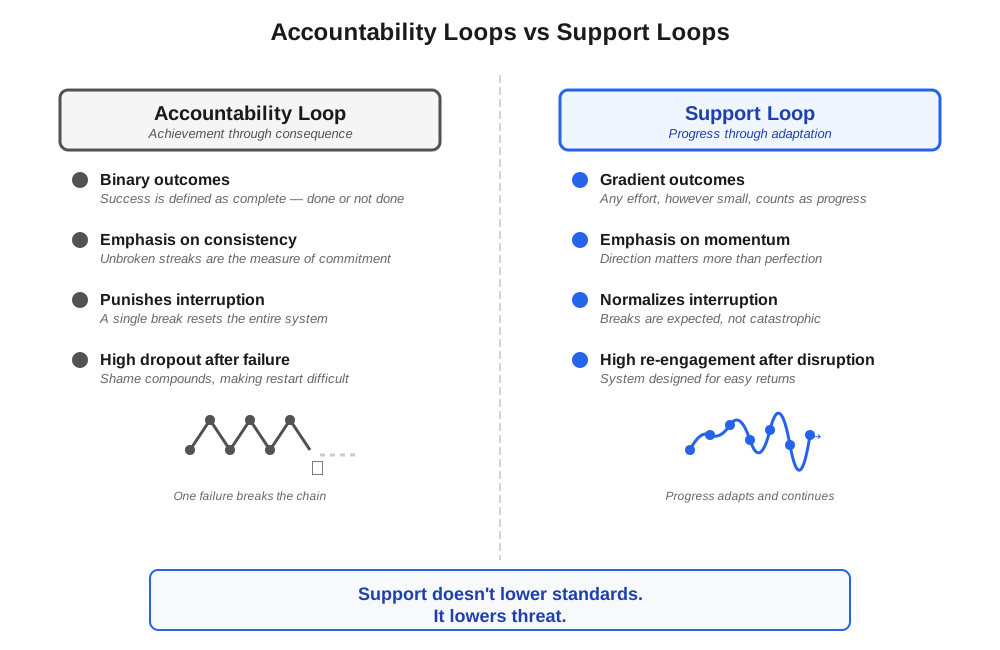
Accountability assumes energy. It assumes that when expectations are applied, a person has the internal capacity to convert pressure into action. Burnout breaks that assumption. When energy is depleted, pressure is no longer motivating, it becomes threatening.
"Accountability assumes energy. Support preserves it."
From a psychological perspective, this shift matters. Under chronic stress or exhaustion, the nervous system prioritizes safety over performance. External demands are processed less as encouragement and more as risk. What looks like procrastination or non compliance is often a protective response.
This is why accountability frequently produces avoidance in burned out individuals. Missed check ins lead to guilt. Guilt makes engagement emotionally costly. Disengagement becomes relief.
The pattern is predictable: expectations rise, capacity falls, and the system interprets the gap as failure. The person interprets it as shame.
The Problem With Binary Systems
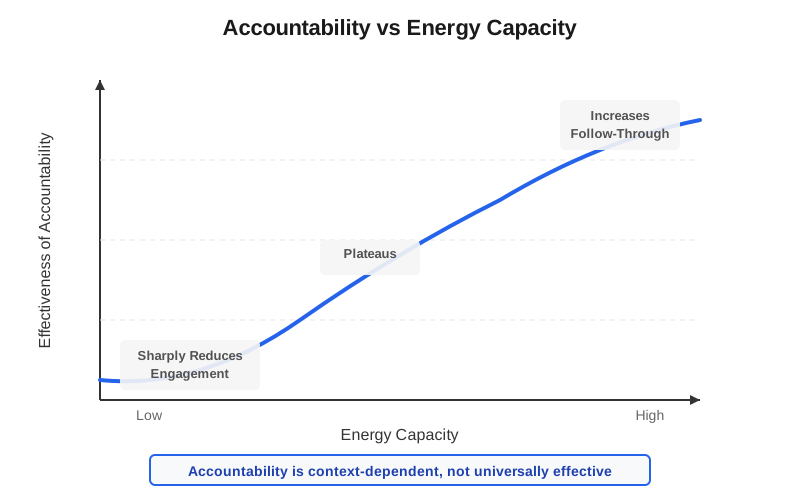
Most accountability systems reinforce this dynamic by relying on binary outcomes: on track or off track, completed or not completed, streak intact or broken. Binary systems are efficient, but they are brittle. They register interruption without explaining it. They assign responsibility without context.
When someone drops out under these conditions, we often label it churn or lack of commitment. But in many cases, what actually drove the exit was emotional overload.
"Churn is often shame, not dissatisfaction."
This helps explain why burned out people don't just stop progressing, they stop showing up entirely. They abandon tools that once helped them. They ghost accountability partners they respect. Not because they stopped caring, but because the cost of engagement became too high.
The Amplification Loop
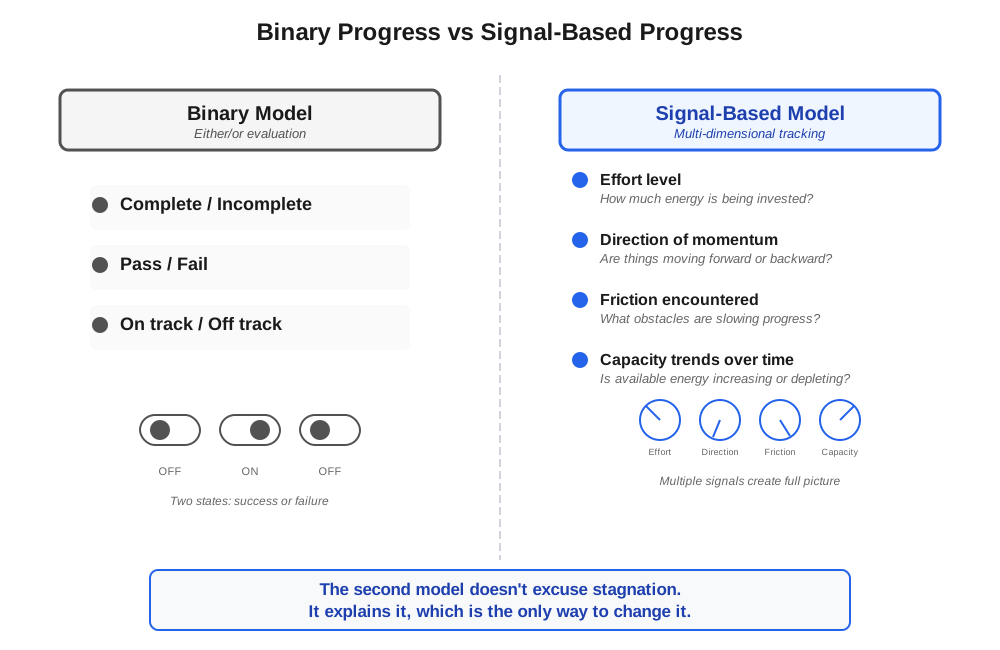
Accountability loops tend to amplify this effect. Expectations create pressure. Pressure demands action. Action is evaluated. When performance falters, the system offers little guidance beyond "try harder." For someone already at capacity, there is nowhere for that instruction to land.
Support based systems behave differently. They assume interruption is normal, not pathological. Instead of asking whether someone complied, they ask what changed. Progress is measured as information, effort, friction, direction, rather than as a moral scorecard.
The distinction is subtle but powerful. Accountability optimizes for compliance. Support optimizes for continuation.
What Burnout Actually Needs
This is especially important for people recovering from burnout, where the primary challenge is not motivation but nervous system load. Systems that reduce threat preserve engagement. Systems that increase pressure accelerate withdrawal.
"Burnout doesn't need discipline, it needs systems that reduce threat."
The cultural overreliance on accountability has consequences beyond personal productivity. In workplaces, it fuels disengagement and quiet quitting. In education, it confuses capacity limits with lack of effort. In behavior change, it undermines sustainability by prioritizing short-term adherence over long term trust.
When Accountability Works
None of this suggests accountability is inherently harmful. It works well under the right conditions, when energy is high, stress is low, and capacity is stable. The mistake is treating it as universally effective, and interpreting its failure as personal weakness.
Burnout reveals what accountability systems are actually optimized for. They perform best when humans behave like machines, consistent, predictable, and resilient to pressure. Real people are none of those things all the time—and dashboards rarely flag goals that fail while the plan still "looks fine", which is where pressure curdles first.
The Real Solution
When systems fail burned out people, the answer is not more pressure. It is better design.
Support is not the absence of standards. It is the presence of safety. And without safety, no amount of accountability will produce sustainable progress.